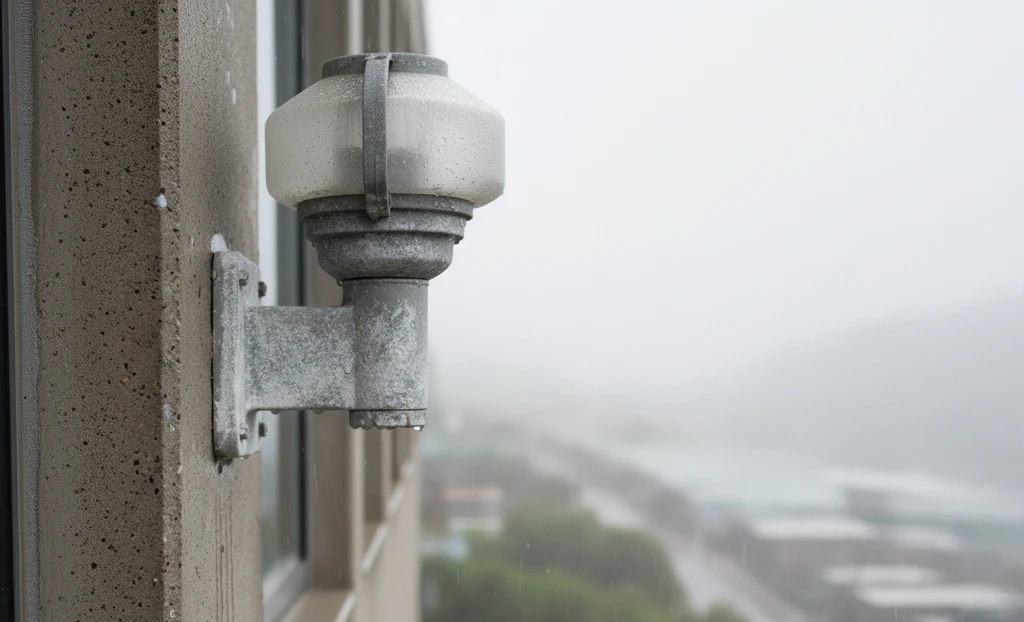
For LED lighting manufacturers, the corrosion resistance of aluminum alloy die-casting structural parts is critical to ensuring project success. Recently, Shine-Choose learned of an incident: a batch of purchased LED light brackets suffered severe corrosion in less than one month of use in a humid environment. Customer complaints occurred frequently, and the supplier’s promised anti-corrosion treatment proved ineffective, causing major losses. This case highlights the urgency of comprehensively preventing corrosion, from process standards to liability determination. Based on this, this article systematically analyzes the anti-corrosion requirements for aluminum alloy die-cast brackets, the causes of corrosion in humid environments, the steps for determining responsibility, and effective prevention strategies. This helps you avoid risks in procurement and quality control and ensure long-term product reliability.
What Corrosion Resistance Requirements Should Aluminum Alloy Die-Cast LED Light Brackets Meet?
| Service Environment | Core Reference Standards | Recommended Surface Treatment Process | Typical Corrosion Resistance Test Requirements |
|---|---|---|---|
| Indoor / General | GB 7000.1, GB/T 2423.17, GB/T 1972, GB/T 8013, or GB/T 5237 (for anodizing) | Conventional anodizing (sealed), electrophoretic coating; note: passivation treatment for specific metal substrates (for low requirements) | Neutral Salt Spray Test (NSS): no significant corrosion within 24-48 hours |
| Outdoor / General | GB 7000.1, GB/T 10125, ASTM B117, EN 60598 (note: harmonized with GB 7000.1) | Powder coating (thickness ≥60μm), hard anodizing | Neutral Salt Spray Test (NSS): no red rust within 48-72 hours |
| Coastal / Industrial Area (C3-C4) | GB/T 19292.1, ISO 9227, ASTM G85 (cyclic salt spray) | Fluorocarbon coating (thickness ≥40-80μm), chromate conversion coating + powder coating | Neutral Salt Spray Test (NSS): 96-500 168 hours; or cyclic salt spray test for more than 1000 hours, with no blistering or peeling of the coating (note: the specific duration is directly related to the coating type and grade; the time requirements of NSS and CASS/Prohesion and other test methods usually cannot be directly compared) |
| High Humidity / Tropical | GB/T 2423.4 (damp heat test), GB/T 1865 (aging test) | Electrophoretic coating, specific anodizing, weather-resistant powder coating | Pass the damp heat test (e.g. 40°C, 93%RH, 48h), and meet corresponding salt spray and UV aging test requirements |
| Road Lighting (Special Outdoor) | GB 7000.203, GB/T 38571 (fluorocarbon coating) | Fluorocarbon coating, high-performance powder coating | Neutral Salt Spray Test (NSS): 48-96 hours or higher; depending on design requirements, it may be higher. Coating thickness must meet the standard and comply with specific safety standards. |
What Causes Rapid Corrosion of Aluminum Alloy Die-Cast Brackets in Humid Environments?
1. Electrochemical corrosion
Cause: Moisture penetrates material pores and forms an electrolyte; the aluminum alloy comes into contact with impurities or dissimilar metals, forming a galvanic cell.
Protection: Surface treatment (such as anodizing and electrophoretic coating); process optimization (reducing porosity and using insulating washers to isolate dissimilar metals).
2. Crevice corrosion
Cause: Moisture is retained in structural gaps, constituting an occluded cell effect such as oxygen concentration differences.
Protection: Optimize structural design to reduce crevices; use sealant for filling; apply a fully covering surface coating (such as an electrophoretic coating).
3. Stress corrosion cracking
Cause: Brittle cracking caused by the combined action of residual stress, a humid environment, and specific corrosive media.
Protection: Process optimization (eliminating residual stress through stress-relief annealing); selecting alloy materials resistant to stress corrosion; ensuring that the surface coating is dense and defect-free to isolate corrosive media.
How Is Responsibility Determined When the Corrosion Protection of Aluminum Alloy Die-Cast Brackets Fails?
| Step | Key Operations and Examples | Determination Criteria |
|---|---|---|
| 1. Verify process and documentation | Review factory reports (such as salt spray test reports); inspect the actual process on the product (such as whether the coating is complete); and verify parameters (such as thickness). | The report must be authentic, valid, and compliant; the process must have no omissions; and measured values must not be lower than contract requirements. If the contract requirements are lower than mandatory national standards, the mandatory national standards shall prevail. |
| 2. Analyze corrosion characteristics | Test the composition of corrosion products; observe the initiation point (whether it originates from defects); and inspect installation conditions (such as galvanic contact). | If the composition points to a specific cause and corrosion starts from internal defects, it tends to indicate a production issue; if caused by external human factors, transportation damage, or environmental damage, it may not be the factory’s responsibility. |
| 3. Evaluate the service environment. | Investigate the actual environment (such as salt spray concentration); verify the environmental agreement in the contract; compare with the product’s designed corrosion resistance grade. | Environmental data must be objective; written agreements must be clear; the actual corrosivity must be checked to determine whether it exceeds the design range. |
| 4. Comprehensive liability determination | Integrate and compare the above evidence; determine responsibility according to the contract and the principle of fairness; third-party appraisal may be introduced. | If the factory process does not meet contract terms or relevant standard requirements, the factory bears responsibility; if the product meets the contract and standard requirements but the actual environment exceeds the scope agreed in the contract and the customer did not inform in advance, the customer bears responsibility; if both parties are at fault, responsibility shall be shared proportionally. |
How to Avoid Corrosion-Related Quality Accidents in Aluminum Alloy Die-Cast Light Brackets?
Typical service environments suitable for LED die-cast aluminum alloy luminaires:
1. Outdoor lighting, such as street lights and garden lights, requires weather resistance.
2. Industrial lighting: factories and warehouses, requiring good heat dissipation.
3. Commercial lighting: shopping malls and hotels, requiring aesthetics and stability.
4. High-humidity environments: swimming pools and coastal areas, requiring corrosion resistance.
5. Extreme temperatures: high-temperature workshops and cold storage rooms.
6. Special indoor environments: garages and kitchens, requiring moisture and oil resistance.
How to avoid corrosion?
1. Surface process: select according to the environment, such as anodizing for dry environments, electrophoretic coating/spray coating for humid environments, and fluorocarbon coating for salt spray environments.
2. Design and installation: the structure should prevent water accumulation, use sealing components and corrosion-resistant fasteners, and conduct regular maintenance and inspection.
3. Comprehensive protection: fully understand the service environment, design the structure and carry out surface treatment according to the environment, and perform proper inspection and testing to effectively extend service life.