1. Why Is the Selection of Drone Accessory Materials So Critical?
| Material | Properties & Selection Considerations | Applications |
|---|---|---|
| Aluminum Alloy | High specific strength balances lightweight and strength; good corrosion resistance; mature processing, relatively low cost; excellent thermal conductivity. | Airframe frame, landing gear, motor mount |
| Magnesium Alloy | Low density (approx. 65% of aluminum), high specific strength, poor corrosion resistance requiring surface treatment, easy to process but difficult to control precision, and relatively high cost. | Battery compartment, gimbal bracket, and other lightweight components |
| Carbon Fiber | High strength, lightweight, enhances performance; high cost, complex processing. | High-end frames, racing components |
| ABS Plastic | Low cost, easy to process, low strength. | Entry-level frames, housings |
| Glass Fiber Reinforced Nylon | Impact resistant, wear-resistant, used for stressed parts. | Propeller blades, gears, etc. |
| PC/ABS | Drop-resistant, flame-retardant, aesthetically pleasing, and lightweight. | Housings, battery compartments |
| Stainless Steel | High corrosion resistance, high torque, heavy weight. | Connectors in harsh environments |
| Titanium Alloy | High specific strength, corrosion resistant and stable, extremely high cost. | High-end gimbals, load-bearing structures |
2. What Are the Common Metal Materials Used in Drones?
- Magnesium Alloy: Lightweight and high-strength, used for lightweight components, but requires surface anti-corrosion treatment.
- Aluminum Alloy: Corrosion resistant and easy to process, widely used in structural components and landing gear.
- 6061 Aluminum Alloy: Drop resistant and durable, suitable for DIY and impact-resistant parts.
- 7075 Aluminum Alloy: High strength, used for core load-bearing parts such as arms.
- 304 Stainless Steel: Corrosion resistant and wear-resistant, suitable for connectors like buckles.
3. Application Scenarios of Aluminum Alloys in Drone Accessories
- Core Structural Components: Airframe mainframe, arms, etc. These bear core loads, requiring high strength and stable load-bearing capacity. 7075/6061 aluminum is commonly used to balance lightweight and strength.
- Motor Mounts and Heat Dissipation Components: Motor mounts, heat dissipation bases, etc. They secure motors and assist in heat dissipation; good thermal conductivity helps reduce temperature, extend lifespan, and enhance impact resistance.
- Landing Gear System: Landing gear main body, struts, etc. They are drop-resistant and impact-resistant, with strong load-bearing capacity, suitable for frequent takeoffs and landings in complex terrain.
- Gimbal and Camera Components: Gimbal brackets, quick release plates, etc. They ensure stable gimbal operation and shooting accuracy; high machining precision reduces shake and improves image quality.
- Other Functional Accessories: Battery compartment frames, GPS mounts, etc. They meet requirements for lightweight, durability, heat dissipation, or signal non-shielding, enhancing performance.
4. Application Scenarios of Magnesium Alloys in Drone Accessories
- Airframe Frame: Core for lightweight but weak resistance to deformation, requiring reinforced design.
- Landing Gear: Significant lightweight effect, poor corrosion resistance, surface treatment is mandatory.
- Gimbal Bracket: Excellent vibration damping, but flammable; must be kept away from high temperatures.
- Battery Compartment Motor Mount, etc.: Lightweight and impact-resistant; attention needed for thermal conductivity and anti-corrosion.
5. Core Performance Comparison: Aluminum Alloy vs. Magnesium Alloy
| Performance Indicator | Magnesium Alloy | Aluminum Alloy |
|---|---|---|
| Density | Approx. 1.74 g/cm³ | Approx. 2.7 g/cm³ |
| Specific Strength | High, close to, or better than aluminum alloy die castings | High, superior to steel |
| Damping Capacity | Excellent, high damping coefficient, significant vibration reduction | Good, but inferior to magnesium alloy |
| Corrosion Resistance | Poor, prone to corrosion, requires surface protection | Excellent, natural oxide film provides good protection |
| Machinability | Easy to cut, but flammable during machining, requires special equipment | Easy to machine, good cutting performance, excellent weldability |
| Electromagnetic Shielding | Good, superior to aluminum alloy | Good, but inferior to magnesium alloy die castings |
| High-Temperature Strength | Low strength decreases significantly above 150 °C | Poor strength decreases rapidly above 200 °C |
6. Cost Comparison: Aluminum Alloy vs. Magnesium Alloy
Since no specific component is used for comparison, we compare three core aspects to estimate the cost differences.
| Cost Item | Magnesium Alloy | Aluminum Alloy |
|---|---|---|
| Raw Material | High proportion (40%-50%). The core is a magnesium ingot, with the price heavily influenced by coal prices and policies; transportation cost is 20% higher (flammable and explosive). | High proportion. The core is an aluminum ingot; the price fluctuates in real time; mature supply chain, normal transportation cost. |
| Processing | Requires protective gas (SF₆+N₂), burning loss 3%-5%; mold life approx. 100,000 pieces; requires moisture and fire prevention, high hidden costs. | Mature and stable process, burning loss 2%-5%; no special safety requirements, rejection rate 3%-8%. |
| Surface Treatment | Accounts for 10%-15%. Clear stratification: chemical oxidation $0.14–0.29/m², environmentally friendly passivation $1.14–1.71/m², with wastewater treatment accounting for 15%. | Mature process (e.g., anodizing), relatively low and stable cost; wastewater treatment cost accounts for a lower proportion. |
7. Differences in Processing Techniques for Drone Accessories
| Comparison Item | Magnesium Alloy | Aluminum Alloy |
|---|---|---|
| Common Material Grades | AZ31B, AZ91D, WE43 (for high-temperature requirements) | 6061, 7075, ADC12, 5052 |
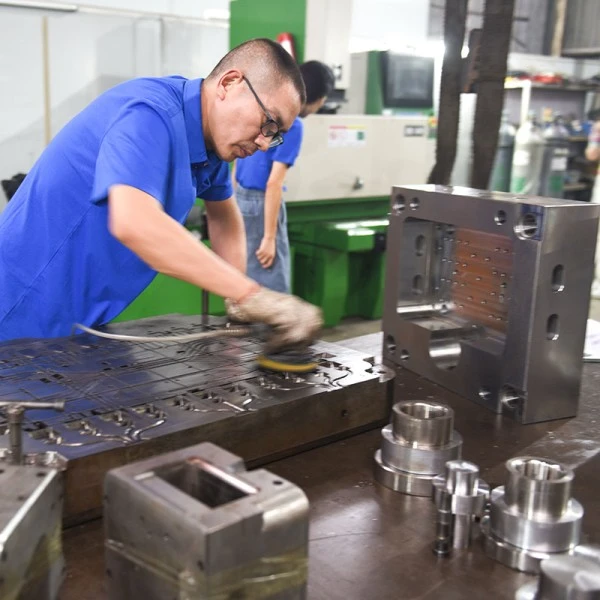
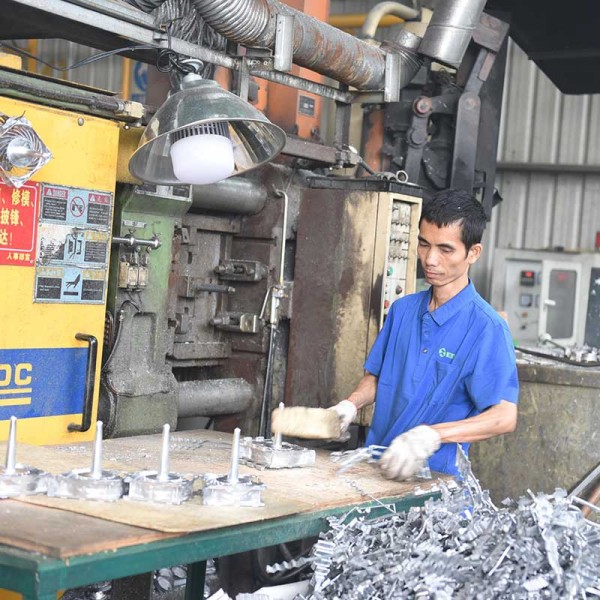
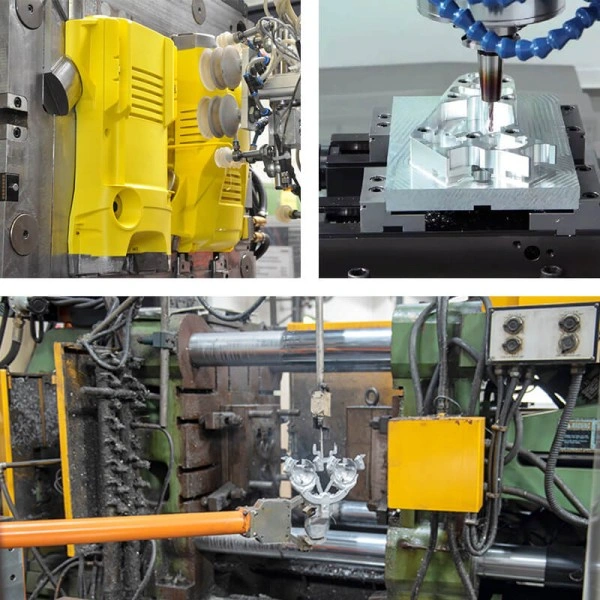
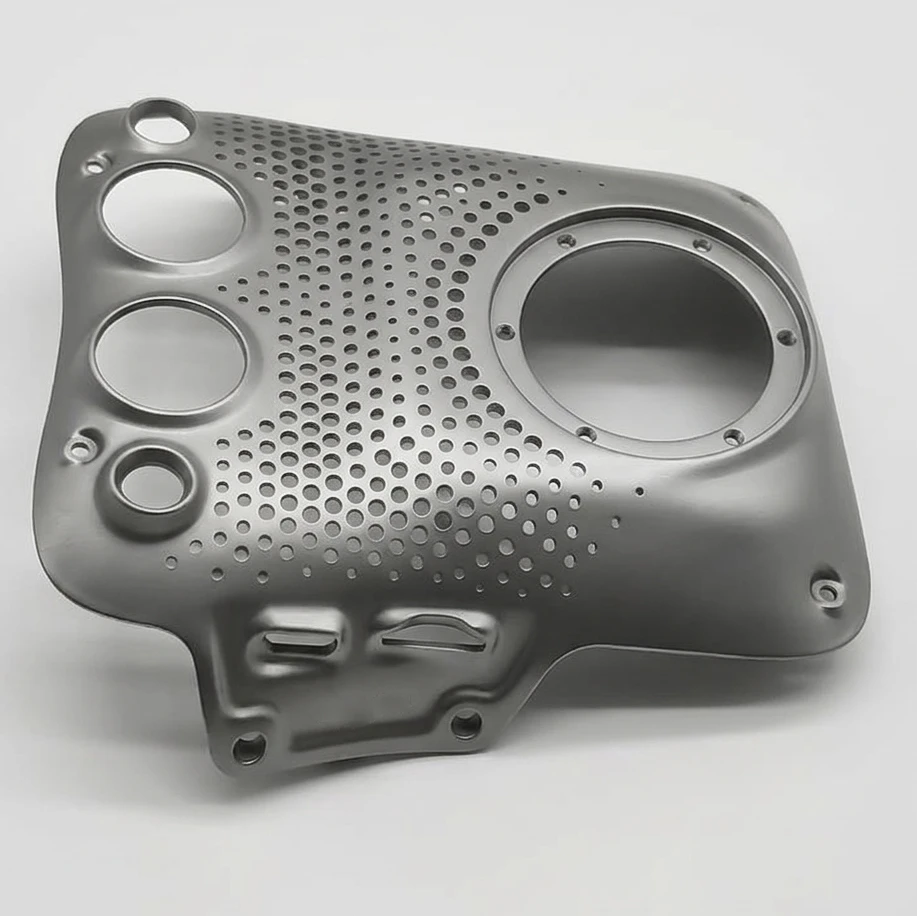
| Core Processing Techniques | Die casting + CNC finishing (mainstream). High-pressure/vacuum die casting for batch structural parts, followed by high-speed CNC milling; small batches or prototypes can be directly CNC milled. | Diversified combination processes. High-precision parts (e.g., frames, motor mounts) mainly use CNC precision machining (including 5-axis); large batches of housings can use die casting + CNC finishing; small parts can be stamped; elongated parts can be extruded. |
| Typical Surface Treatment | Micro-arc oxidation (mainstream), environmentally friendly chemical conversion coatings (e.g., zinc phosphate), electroless nickel plating, electrophoretic coating, and powder coating (requires pretreatment). | Anodizing (mainstream) (including regular and hard anodizing), sandblasting + anodizing, electrophoretic coating, powder coating, chemical oxidation, passivation, and micro-arc oxidation (high-end requirements). |
| Key Safety & Process Considerations | Safety first: Magnesium chips are flammable during processing; specialized coolant/flame retardant must be used, Class D fire extinguishers must be available, and chips must be removed promptly. Process considerations: Low-temperature aging treatment is often required after CNC to relieve stress and control deformation; die castings require attention to porosity defects; effective pretreatment before surface treatment is necessary to ensure adhesion. | Process challenges: Focus on solving issues like aluminum alloy sticking to tools (use coated tools), thin-wall deformation (optimize clamping and milling strategies), and precision maintenance (recommended constant temperature environment). Post-treatment: Aging treatment is typically required after processing to stabilize material properties and relieve stress. |
8. Recommendations for Selecting Drone Accessories
The selection of drone alloy accessories requires balancing performance, environment, and cost. The following is a precise selection reference table validated by experienced technicians:
| Scenario/Type | Recommended Material | Core Justification | Considerations |
|---|---|---|---|
| Core Load-Bearing Parts (Frame/Arm) | 7075/6061 Aluminum | High strength, fatigue resistance, balanced weather resistance | 7075 offers higher strength; 6061 offers better cost-effectiveness |
| Non-Structural Parts in Dry Environments | Magnesium Alloy | Extreme weight reduction, excellent vibration absorption | Must undergo anti-corrosion surface treatment |
| Non-Structural Parts in Corrosive Environments | Aluminum Alloy with Surface Treatment | Weather resistance far superior to magnesium alloy | Preferred for coastal/agricultural drone scenarios |
| Cost-Sensitive Mass Production/DIY Parts | 6061 Aluminum-Zinc Alloy | Low-cost, mature processing technology | Zinc alloy used where weight is not critical |